

Automating for Safety, Efficiency, and Precision
By Stephen Hood | October 10th, 2025
October 10th, 2025
The Origin of Automation
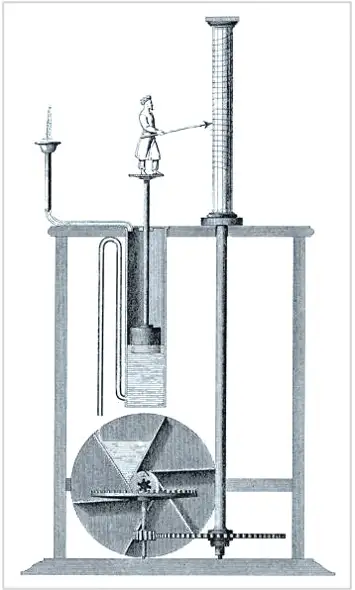
From player pianos and jukeboxes to airliner autopilots and precision assembly robots, automation is a defining feature of modern life. Its widespread application begins with the industrial revolution in the 18th and 19th centuries, but the concept actually dates back centuries when ancient civilizations in Asia and the Mediterranean developed water clocks, water wheels, and animal-powered stone mills. And though the word robot was introduced by Czech writer Karel Čapek in 1920, accounts of automatons are found in ancient Greek and Chinese texts.[1]
Over the course of the 19th and 20th centuries, the mass production of low-cost goods was made possible by the automation of manufacturing—prominent examples include textiles and the canning and bottling of foods and beverages. At the same time, automation made its way from industry to consumer, giving us such modern conveniences as the washing machine, the automatic garage-door, and the thermostat-controlled air-conditioner.
Following the invention of the electronic programmable computer during World War II, digital technology was increasingly applied to automated systems. Now, in this third decade of the 21st century, automation is augmented with artificial intelligence and digital feedback that enables machine learning. The application of such systems include mapping for precision agriculture, modelling oil and gas reservoirs, and even medical diagnostics.
The Sense of Automation
The term auto is Greek for self, thus an automobile is a vehicle that moves itself. It still requires a driver, however, which is why we use the term self-driving car for the newer, more automated vehicle—to say self-driving automobile would be awkwardly redundant. The word robot comes from the Old Czech robota, meaning servitude, serfdom.
The basic aims of practical automation have always been to unburden humans from laborious or repetitive work and to ensure precision in a given task. Grinding down huge lots of wheat using a wind- or water-powered mill is easier than doing so by hand (which would be exhausting), and a clock is infinitely more precise than a human trying to count out the minutes all day long (also exhausting, and very prone to error).
Today’s intelligent automation goes beyond these basic aims, providing not just efficiency and precision, but also greater safety and the capability to perform tasks previously impractical or impossible. For example, 3D printing enables fabrication of customized medical implants and prosthetics with highly complex internal structures that are matched perfectly to the patient’s anatomy.
The Application of Automation
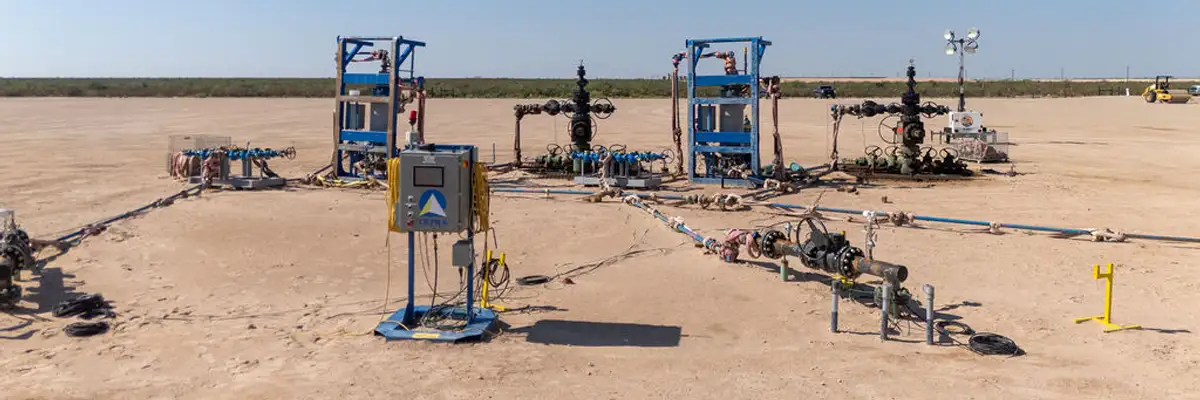
Over the past several years, automation has been applied to the exploration and production of hydrocarbons. Among the applications are drilling, subsea work, pipeline inspection, water management, and frac-plug cleanout—all of which are made safer and more efficient.
Another is sand management. TETRA has been at the forefront of innovating technology to automatically capture, weigh, and flush sand from the flowstream. Sand, as we know, is used as a proppant to prop open formation fractures, enabling the valuable hydrocarbons to flow from the rock and out the well. Sand is also present in the geological formation itself.
Yet, sand in the production flowstream can plug and erode flowlines and production equipment and even damage the wellbore and casing. Each year, the damage caused by sand costs the industry millions of dollars in repairs and losses. So, removing the sand is a high priority.
The Grit of Automation
TETRA offers two main configurations for automated sand management, our single-source unit for one well and our multi-source unit that can handle up to six wells at the same time—the latter provides a significant economic advantage to customers as they bring online multiple wells at a single pad site.
Both configurations use our super-efficient TETRA SandStorm hydrocyclone technology, which captures up to 100% of the sand. And both can be paired with our automated rotating weight basket, an autonomous weighing system that eliminates the need for personnel to manually weigh sand.
The Safety of Automation
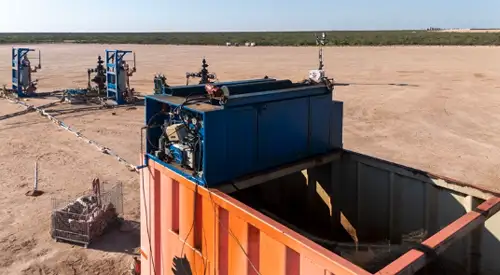
Manually flushing sand requires someone enter a hazardous environment and open and close valves as frequently as every five minutes, during which the worker is standing amid high-pressure flowlines subjected to erosion and potential rupture. Behind each valve is high pressure ranging from 2,000 to 6,000 pounds per square inch.
To manually measure the volume of sand removed from the flowstream, a worker must climb onto a tank, remove the sand-loaded filter sock, and weigh that sock. Working at heights on an open-top tank containing produced water and residual hydrocarbons is hazardous.
Guided by our TETRA BlueLinx automated control system, our TETRA sand management technologies automate these tasks, thereby reducing exposure to high-risk situations and greatly improving worker safety. Improving safety was a key driver in developing these technologies.
The Metrics of Automation
An additional benefit of automation, beyond safety and efficiency, is capturing accurate metrics. Quantifying processes is essential to assessing their effectiveness—we must record measurements and sometimes make calculations to know we’re actually achieving what we want to achieve. Manually doing so requires a worker walk around a jobsite, taking readings off equipment gauges.
In the case of sand management, quantifying the captured sand is crucial to understanding the condition of the reservoir and the content of the flowstream—Are sand volumes rising or falling? What’s the ratio of reservoir sand compared to the proppant sand pumped down the hole to frac the formation? Can we scale down equipment needs to reduce costs or should we scale up to prevent erosive damage to production equipment? Knowing these parameters helps one better manage production.
Computerized automation enables the capture and reporting of precise metrics without exposing workers to the hazards of high pressures, vapors, and potential hand injuries. It’s also far less prone to errors. Humans are fallible creatures; we make mistakes, especially when working at length in high-stress environments.[2] Taking human error out of the equation significantly elevates the degrees of accuracy, which in turn facilitates refinement of operations for maximum efficiency.
The Paradox of Automation
One of the concerns about automation is the economic displacement of workers. This was the fear of the English Luddites in the early 1800s, who opposed automated textile production and went about the country destroying weaving machines. Needless to say, their destructive rampage did nothing to turn the tide. Thereafter, the word Luddite came to be a disparaging term for someone who opposes technology.
In reality, most automated systems still require human operators. This is the paradox of automation—“the irony that the more advanced a control system is, so the more crucial may be the contribution of the human operator.”[3] A highly automated power grid still requires continuous human oversight, and the 3D printer fabricating a cranial implant requires the input of specifications for the patient, to say nothing of powering it on and off and filling it with the raw material that will make up the fabricated device.
Likewise, automation can actually facilitate job growth. The advent of the automated teller machine in the 1980s, for example, ultimately prompted banks to open more branches and employ more tellers, while the role of the human teller shifted from cashier-like clerk to salesperson, “forging relationships with customers, solving problems, and introducing them to new products like credit cards, loans and investments.”[4]
Automation in the oilfield is not killing jobs, it’s making the work safer, more precise, and more efficient. Even going beyond those benefits, it has become a practical necessity, helping to meet the challenges of a steadily intensifying labor shortage. In this respect, automation may help insulate the oil and gas industry from the worst of market disruptions that seem to come every few years—something we can all be grateful for.
Endnotes
[1] Nadia Ambrosetti, 2010, Cultural Roots of Technology: An Interdisciplinary Study of Automated Systems from Antiquity to the Renaissance, Doctoral Thesis, University of Milan; Karel Čapek, 1920, R.U.R. (Rossum’s Universal Robots), Project Gutenberg (online).
[2] N.H. Mackworth, 1948, “The Breakdown of Vigilance During Prolonged Visual Search,” Quarterly Journal of Experimental Psychology, Vol. 1, No. 1, pp. 6–21. Even after 77 years, Mackworth’s study remains definitive, having laid the foundation for understanding the limits of human attention (or vigilance) over time.
[3] Lisanne Bainbridge, 1983, “Ironies of Automation,” Automata, Vol. 19, No. 6, pp. 775–779.
[4] Jonathan Church, 2025, “Artificial Intelligence Cannot Replace the Soul of Writing,” Voegelin View, 8 July (online).

