

Driving Safety
By | May 28th, 2026
May 28th, 2026


“We are so distracted behind the wheel, we are already driving as if our cars were self-driving.”
—Matthew B. Crawford, Why We Drive
Everyday Risk
Of all the risks in the oil and gas industry, the most pervasive is driving. While there are a number of risks in the extraction of crude oil and natural gas from geological reservoirs, most are associated with specialized tasks like running drill pipe or turning valves. By contrast, driving or riding in a motor vehicle is the one thing that everyone traveling to and from an onshore worksite must do.
Most of us don’t consider driving to be all that risky. We calmly climb into our cars to drive to work, yet we might get anxious when boarding an airliner, even though flying is actually safer.[1] That gut feeling likely arises because we’re in the driver’s seat of our cars and not at the controls of the airplane; perhaps we feel that we can do something at the last second to avoid the roadway accident, whereas we’re entirely powerless as an airline passenger.
The rarely spoken truth is that life itself is saturated with risk, and driving is one of the riskiest tasks people undertake on a daily basis. According to the US National Highway Traffic Safety Administration, in 2025 an estimated 36,640 people died in motor vehicle crashes in the United States. Texas accounted for 3,809 of those deaths with 17,500 people sustaining serious incapacitating injuries.[2]
Looking at road accidents in other countries, in 2025 there were approximately 1,600 fatalities and about 29,000 seriously injured in the United Kingdom, 210 fatalities and 2,000 seriously injured in Sweden, and 183 fatalities and 900 injured in Finland.[3]
Driving the Oilpatch
Oil-and-gas-producing regions are largely rural, and driving in these areas can be especially troublesome because most highway fatalities occur on rural roads.[4] These roads may be less maintained and some are unpaved, giving rise to thick clouds of dust that obscure the visual field. (Applying TETRA DuraBase or CC Road calcium chloride to gravel roads is an excellent way to control such dust.)
Rural roads also tend to be narrower, often with just one or two lanes, which prompts passing in the opposing lane around slower vehicles like large trucks. But the most troubling hazard on rural roads is speeding, possibly abetted by lower traffic density, limited speed enforcement, and a vastness that seems to beckon some drivers to greatly exceed the posted speed limit. Add to these hazards, distraction or recklessness and there’s an accident waiting to happen.
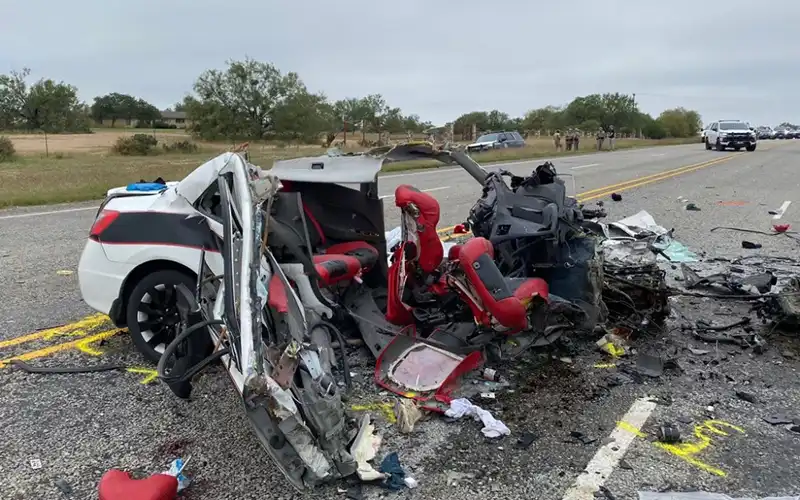
Driven to Distraction
Driver distraction is diversion from engagement with the task of operating a motor vehicle. Diversions can be auditory, bodily, cognitive, or visual. Examples include eating, adjusting controls, rubbernecking, and reaching for something, but among the most hazardous is hand-held use of a mobile phone. Why? Because it can and often does involve all four types of diversion. Texting or scrolling through a playlist while driving is clearly the most perilous, but even conversing on the phone or using GPS while holding the device greatly elevates risk.[5]
Driving is actually a complex task requiring the simultaneous execution of sensory, cognitive, and motor skills—one has to learn how to drive. But there’s an irony to perfecting these (or any) skills, in becoming all too familiar with their demands.
Familiarity is a double-edged sword: it cuts away self-doubt to build confidence but it can also breed complacency. When a task becomes habitual, we often switch to mental autopilot, and driving is no exception—as with learning to ride a bicycle, we soon internalize the various skills needed to drive. But unlike the advanced systems on airliners, our mental autopilots are not so vigilant. Inattentive routine can elevate risk.
Many of us, if not all of us, have probably experienced road or highway hypnosis, the altered state of taking one’s mind off the road so completely that when immediate awareness returns one cannot remember the last few miles or even the entire drive.[6] Some of us might even be alarmed by this sudden apprehension, that a mental vacation behind the wheel of a 4,300- pound vehicle soaring down the road at 60+ miles per hour is not exactly the safest way to get from Point A to Point B—especially when surrounded by other drivers who might also be ‘hypnotized’.
Researchers have proposed various causes for road hypnosis, also called driving without attention mode—fatigue, drowsiness, the drone of road noise, vehicle vibrations, a monotonous visual field, a stream of captivating thought, and even blood sugar levels. Whatever the cause, the trance-like state can occur practically anywhere, on a rural road, a crowded freeway, or a neighborhood street.[7] Obviously, such inattention can slow reaction time when a sudden situation demands a quick response.
Beyond the Driver’s Seat
Other factors that can contribute to vehicle accidents are atmospheric conditions, road hazards, and mechanical failure. In the United States, approximately 12% of crashes are considered weather-related and about 2% are attributed to mechanical failure.[8]
While these factors may seem to be out of our hands—because nobody can control the weather, pinpoint where a deer will leap out of the darkness, or predict exactly when a tire will blow—we’re not entirely powerless either. We have control over maintaining our vehicles, ensuring tires are not worn, tire pressure is correct, head and taillights work, wiper blades are effective, and the brakes are good. We also have control over how we drive in bad weather or when encountering hazards—we can slow down and be hyper-vigilant of what other drivers around us are doing . . . or not doing.
Elements of the TETRA Standard
As a Company that provides services to the oil and gas industry, TETRA has a fleet of vehicles and a comprehensive driving standard. The policy sets fourth stringent requirements for vehicles and drivers to enable safe driving—because safety is a ONE TETRA core value and we want people to get where they’re going without harm.
Regarding Company vehicles, all are equipped with 3-point inertial reel seatbelts for each occupant, and all are fitted with in-vehicle monitoring systems that record GPS location, journey data, and behaviors like seatbelt use, speed, harsh braking, harsh cornering, and distance driven.
As for drivers, those authorized to operate TETRA vehicles, they must be rested and alert before driving, and they must ensure that everyone in the vehicle is wearing a seatbelt before beginning to drive. Drivers must not engage in any activity that distracts from safe operation of the vehicle, including hand-held use of mobile electronic devices while driving. Only hands-free voice communication is permitted.
Additionally, TETRA drivers must take 10-minute breaks outside the vehicle for every two hours of driving, and they must invoke Stop Work Authority any time they feel fatigued or drowsy. And where feasible, drivers should reverse park, a common practice throughout the oil and gas industry. Reverse parking in spaces and exiting forward is demonstrably safer than backing out, especially for trucks that sit higher where seeing pedestrians behind the vehicle may be difficult.
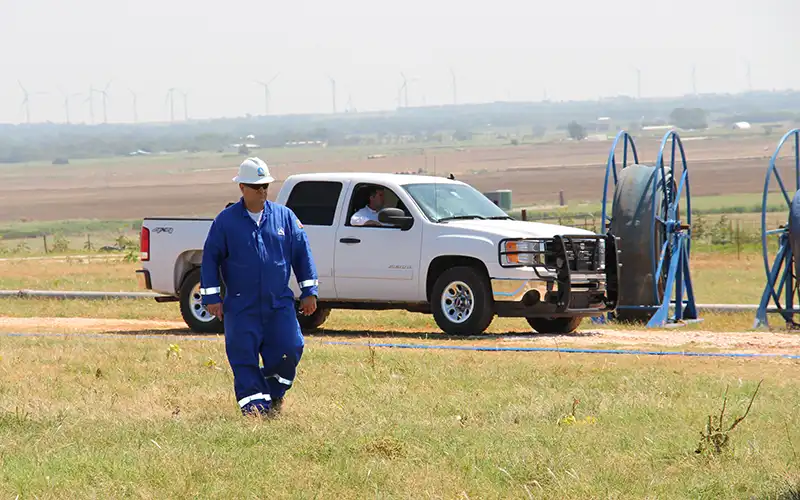
authorized to drive Company vehicles.
Taking Control
The good news is that driving safety has actually improved over the years.[9] The reasons behind this trend include greater use of seatbelts, mandatory factory airbags, rearview cameras for backing up, and better roadway design. But one of the most significant factors has been vast improvements in the design and construction of automobiles, with safety being a priority among automakers and consumers.
The contrast between old and new is starkly illustrated in a 2009 crash test conducted by the US Insurance Institute for Highway Safety. In the 40-MPH head-on collision, the front compartment of the 2009 car is virtually unscathed, whereas that of the 1959 car is crushed and mangled, leaving little doubt the driver of the older car would be killed or gravely injured. Classic cars may look more stylish, but it’s a myth that on-frame, heavy steel construction confers greater safety.
Improvements aside, one roadway fatality is one too many. Almost 40,000 in one year is far too many—and unacceptable. Zero crashes might be unattainable, but zero fatalities should remain the goal. And striving toward that goal requires very deliberate focus when driving, keeping one’s mind and eyes on the road.
As drivers we’re not tiny spiders riding the wind; we’re controlling a machine with enough mass and inertia to crush steel and cause serious injury or death. If there’s one lesson to come away with here, it’s the absolute need for task engagement when driving—because each driver affects the actions and reactions of countless others on the road.
No, we are not spiders, but roads are webs of intense interaction. Safe driving demands continuous vigilance, attention to not only controlling one’s own vehicle but also keen awareness of other drivers, the roadway, and the environment. We can’t control other drivers, the weather, or where and when hazards emerge on the road, but we can control our sense of task engagement and how we act. Driving may seem like a simple task but it’s not; it’s a complex task that entails tremendous responsibility.
Resources
- American Petroleum Institute, Driving Safely
- Argentina Government, National Road Safety Agency
- Liikenneturva (Finland), Road Safety Tips
- Permian Road Safety Coalition
- RoSPA (UK), Road Safety
- Trafikverket (Sweden), Vision Zero
- USDOT, Our Nation’s Roadway Safety Crisis
Endnotes
[1] Philip Mann, 2025, “Beyond Intuition: Why Flying Really Is Safer Than Driving,” LinkedIn, 13 April (online).
[2] Texas Department of Transportation (TxDOT), “2025 Crash Statistics” (online).
[3] GOV-UK, 2025, “Reported Road Casualties in Great Britian, Provisional Estimates: Year Ending June 2025,” Department for Transport (online); Tranport Analysis (Sweden), 2025, “Vägtrafikskador 2024” (online); Statistics Finland, 2025, “Statistics on Road Traffic Accidents” (online).
[4] USDOT, 2023, “Local and Rural Road Safety Program,” Federal Highway Administration, 9 May (online).
[5] K. Young and M. Regan, 2007, “Driver Distraction: A Review of the Literature,” in Distracted Driving, eds. I.J. Faulks, et al. (Sydney: Australasian College of Road Safety), pp. 379–405.
[6] A.H. Wertheim, 1978, “Explaining Highway Hypnosis: Experimental Evidence for the Role of Eye Movements,” Accident Analysis & Prevention, Vol. 10, No. 2, pp. 111–129.
[7] J.L. May and A.G. Gale, 1998, “How Did I Get Here? Driving Without Attention Mode,” Contemporary Ergonomics, ed. M.A. Hanson (London: Taylor & Francis), pp. 456–460. The altered state has been observed in not only automobile drivers but also train engineers and airline pilots, as well as industrial and assembly-line workers.
[8] USDOT, 2025, “How Do Weather Events Affect Roads?” Federal Highway Administration, 15 July; Adanu, et al., 2024, “Injury-Severity Analysis of Crashes Involving Defective Vehicles,” Heliyon, Vol. 10, No. 5, 15 March (online); Current data on road accidents attributed specifically to road hazards is unavailable.
[9] USDOT, 2024, “The Roadway Safety Problem,” November (online).
